
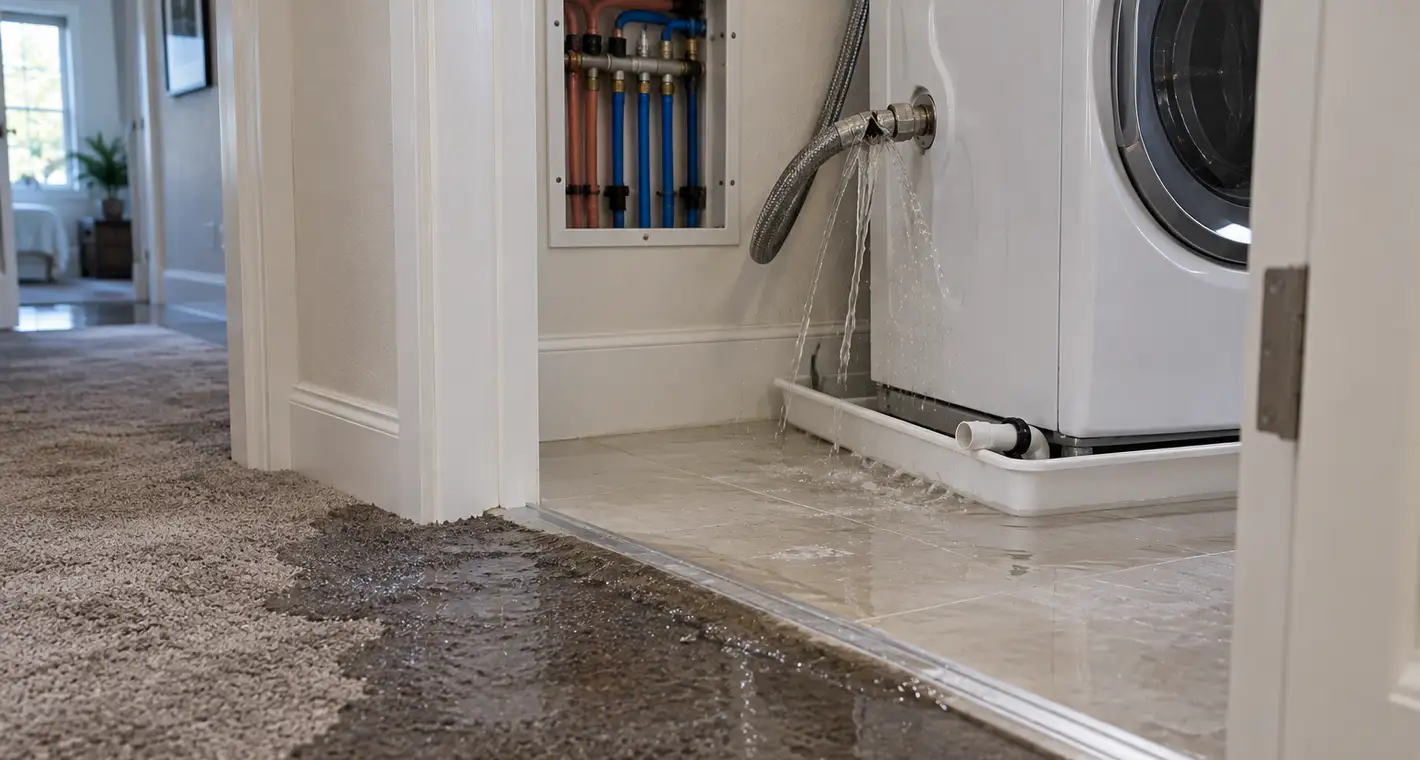
Emergency water removal Coto de Caza in a large custom home
Coto de Caza fills a valley along Coto de Caza Creek in the foothills of the Santa Ana Mountains, gated and surrounded by open land on three sides. The floor of the valley drains into Arroyo Trabuco, and the ridges above the community carry runoff straight down into it. Sixty-three percent of the homes here were built in the 1990s, with a median year of 1995 and a further 15 percent from the 2000s. These are large detached custom and semi-custom houses on generous lots, many of them two-story with several bathrooms and separate wings, plus the older estates at Los Ranchos.
Before help arrives
- Shut the water off at the fixture or the main if you can reach it safely.
- Keep out of any room where water has reached outlets, cords, or the electrical panel.
- Lift furniture off wet carpet and move what you can to a dry floor.
- Photograph the damage and the failure point before anything is moved.
- Do not use a household vacuum to pick up standing water.
Burst pipe cleanup Coto de Caza and 1990s pipe materials
Long runs and many fixtures
A large custom house has several times the plumbing of a tract home: more bathrooms, a wet bar, two laundries in some plans, and long horizontal runs through walls and slab to reach them all. Statistically that is more joints and more valves, and the failure rate scales with them. It also means a leak can be far from the room where it eventually appears.
Rooms nobody enters daily
Guest suites, casitas and upstairs wings sit unused for weeks at a time. A supply line or a toilet fill valve that fails there has nothing to interrupt it, and the water works through the floor assembly and into the level below before anyone notices. This is the most common reason a loss here is large rather than small.
Runoff off the canyon walls
The community sits below open slopes that shed water fast in a storm and shed mud after any fire on them. Drainage swales, culverts and driveway crossings fill with sediment through a dry season. When the first heavy rain overwhelms one, the flow crosses a lot and stacks against whatever is downhill, which on these properties is usually a garage or a lower-level room.
1990s pipe of three different kinds
Building through the 1990s meant copper on some houses, polybutylene on others and early plastic systems on the last of them, sometimes within the same street. Polybutylene was installed nationally until the mid-1990s and fails by splitting rather than weeping. Identifying which system is in a given house is the first question a provider or a plumber asks. It is answered at the water heater.
Ceiling leak repair Coto de Caza when a wing sits unused
Square footage is the complication. A single loss in a house of five or six thousand square feet crosses more rooms than the same failure in a tract home. Drying it takes more equipment, and more electrical capacity than a standard setup provides. Providers usually stage it rather than trying to run everything at once.
The order of work does not change: extraction, then air movers and dehumidifiers together, with readings logged daily. It is set out on the water extraction and drying page.
Mold remediation Coto de Caza after a leak ran for days
The pattern here is a leak in a guest wing or a rarely used bathroom that ran for days before discovery. By then the material is beyond drying, and the work becomes controlled removal with containment so the rest of the house stays clean. Mold remediation is a separate scope of work with containment and controlled removal, and a slab leak that ran for weeks is the usual reason it is needed.
Services available in Coto de Caza
- Water Extraction & DryingStanding water removal and controlled structural drying under moisture readings.
- Slab Leak Damage RepairWater surfacing through a post-tension or conventional slab, traced and dried out.
- Sewage CleanupContaminated water handled with containment, removal and cleaning.
- Mold RemediationGrowth that established after water sat longer than it should have.
Areas covered across Coto de Caza
Providers cover Coto de Caza and the surrounding area, including Los Ranchos Estates, the Village, Coto Valley, Vista Del Verde, Weatherly and the Summit.
ZIP codes: 92679.
Water damage restoration Coto de Caza: common questions
- Can a leak run for days without anyone noticing?
- In a house with unused rooms, easily. The clues are indirect: a water bill that jumped, a faint musty smell in a hallway, a section of baseboard that has darkened. Anyone with a property of this size is well served by a leak detector on the main supply line, because it turns a multi-day loss into a phone alert.
- Does being behind the gates delay a provider?
- Only if nobody has cleared access. Guard-gated entry means the resident needs to authorize the crew, and after hours that takes a call. Giving the provider the vehicle and company name when the job is booked, and telling the gate to expect them, removes the delay entirely.
- Is fire debris a factor in water damage here?
- After a fire on the surrounding slopes, yes. Burned ground sheds far more water and carries sediment with it for several rainy seasons afterward, so drainage that coped before can be overwhelmed. Water that arrives with mud is contaminated, and the affected porous material is removed rather than dried.
- How much equipment does a house this size need?
- More than a standard house, and more electrical capacity than one circuit provides. A loss across two or three rooms in a large home can call for a dozen air movers and several dehumidifiers, which cannot all run off the same panel legs. Providers plan the layout around available circuits, sometimes stage the drying room by room, and occasionally bring temporary power. That planning is part of why the first visit takes longer here.