Emergency water removal San Clemente on a terraced street
The city is built on marine terraces stepping down to the surf, cut by the Prima Deshecha and Segunda Deshecha canyons. Streets in the southwest run straight downhill to the beach and the rail corridor at the bottom, while Talega and Forster Ranch sit on the high ground several hundred feet inland. The age profile has two peaks rather than one. Around 21 percent of the housing was built in the 2000s, almost all of it at Talega. Another 9 percent dates from the 1950s and 11 percent from the 1960s. Downtown holds pockets from the 1920s and 1930s. The median of 1983 describes almost no actual street.
Before help arrives
- Shut the water off at the fixture or the main if you can reach it safely.
- Keep out of any room where water has reached outlets, cords, or the electrical panel.
- Lift furniture off wet carpet and move what you can to a dry floor.
- Photograph the damage and the failure point before anything is moved.
- Do not use a household vacuum to pick up standing water.
Burst pipe cleanup San Clemente: galvanized downtown, PEX on the ridge
Galvanized steel supply lines downtown
Houses from the 1920s through the 1950s were plumbed in galvanized steel, and any that were never repiped are decades past the end of that pipe's life. Galvanized fails by closing up with rust until pressure drops, then by splitting at a threaded joint. Discolored water at a tap and pressure that has faded over years are the warning. The failure that follows is sudden.
Two eras of construction, two failure patterns
Talega and Forster Ranch homes are on PEX or late copper with manifolds, and their failures are at fittings and appliances rather than in the pipe wall. Downtown the pipe itself is the problem. Knowing which half of the city a house is in tells a provider where to look first, and it is often the difference between an hour and a day of searching.
Runoff down the terraces
Rain on these streets does not pond, it runs, and it gathers speed on the way to the beach. Where a driveway apron, a side yard or an area drain cannot take the volume, the flow goes into a garage or a lower level. The same mechanism has repeatedly moved hillside material onto the rail line below the bluff, which is why drainage on these slopes gets watched closely.
Fire sprinklers and attic equipment in newer homes
Homes built after January 2011 carry residential fire sprinklers, and most large houses on the ridge have air handlers and condensate lines in the attic. Both put water above the living space of a two-story house. A stuck float switch or a knocked sprinkler head sends it down through the ceiling of the level below at a rate no bucket keeps up with.
Ceiling leak repair San Clemente under attic equipment
Old Town houses have lath and plaster, raised floors in places and small rooms, so equipment placement is tight and drying takes longer. Talega homes are large, sealed and finished with engineered floors over slab, which hold water at the edges and need dehumidification. The same loss produces two different scopes of work.
The order of work does not change: extraction, then air movers and dehumidifiers together, with readings logged daily. It is set out on the water extraction and drying page.
Mold remediation San Clemente in the older southwest streets
In the older southwest streets, growth is usually found in a wall that has been damp for years rather than days, often under a window or at the base of an exterior wall on the weather side. That is a remediation job with containment, not a drying job. Mold remediation is a separate scope of work with containment and controlled removal, and a slab leak that ran for weeks is the usual reason it is needed.
Services available in San Clemente
- Water Extraction & DryingStanding water removal and controlled structural drying under moisture readings.
- Slab Leak Damage RepairWater surfacing through a post-tension or conventional slab, traced and dried out.
- Sewage CleanupContaminated water handled with containment, removal and cleaning.
- Mold RemediationGrowth that established after water sat longer than it should have.
Areas covered across San Clemente
Providers cover San Clemente and the surrounding area, including Talega, Forster Ranch, Rancho San Clemente, Marblehead, Shorecliffs and Southwest San Clemente.
ZIP codes: 92672, 92673, 92674.
Water damage restoration San Clemente: common questions
- Water is coming in at the garage during storms. What causes that?
- On a downhill lot the garage slab is usually the first opening water reaches on the street side. The driveway funnels everything toward it. The usual causes are a blocked area drain, a driveway that was repaved to a higher level than the apron, or a swale that has been landscaped over. It reads as a plumbing failure and it is a drainage one.
- Are older homes harder to dry?
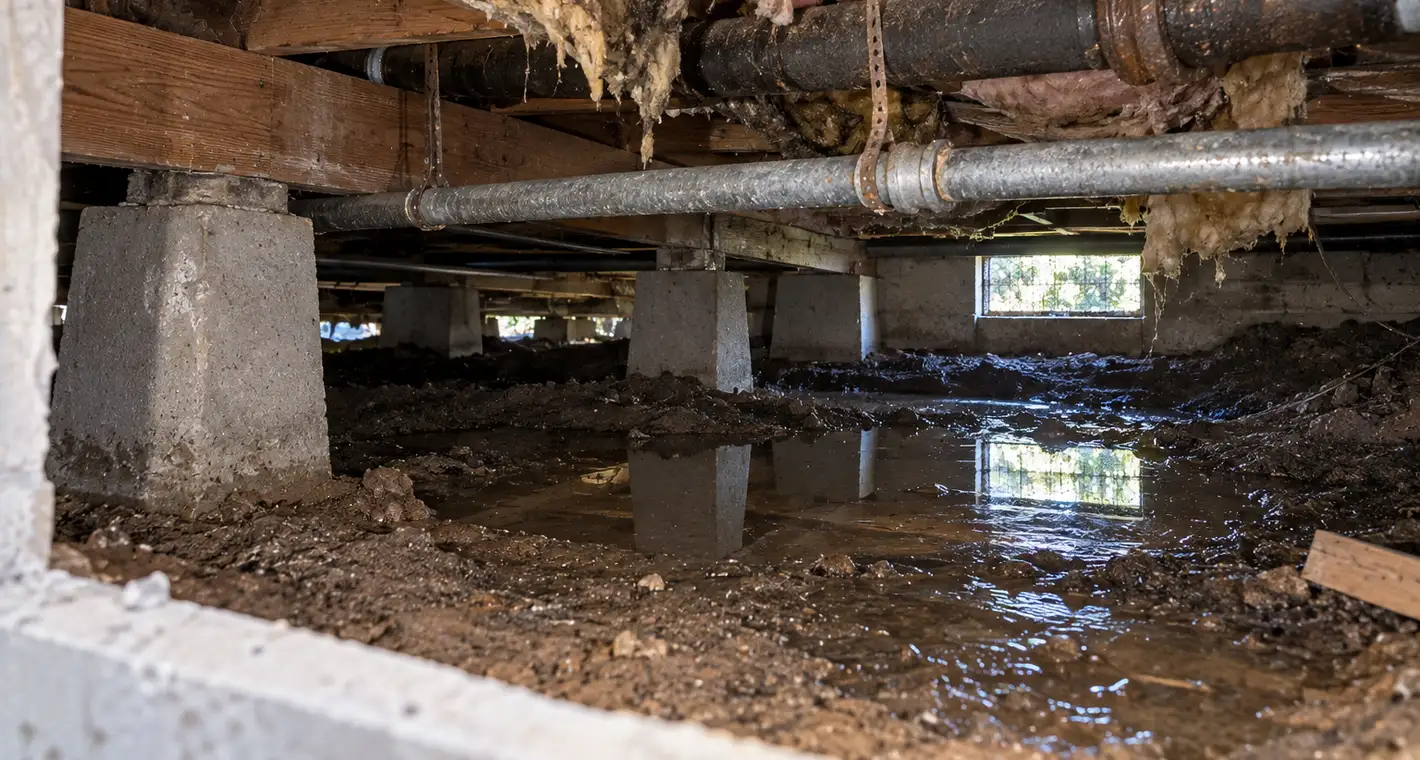
- Slower rather than harder. Lath and plaster holds more water than gypsum board and releases it more gradually, and raised floors put a hidden cavity under the room. Drying targets do not change, but the equipment stays longer and readings are taken in the crawl space as well as in the room above it.
- Does the marine layer affect drying here?
- It does, particularly in the streets closest to the water. Outdoor humidity is high enough for much of the year that ventilating a wet house makes the problem worse. Providers close the building and control the air inside it instead, which is the same approach used in Dana Point and along the coast in Laguna Beach.
- How can I tell whether my house still has galvanized pipe?
- Look where the supply line enters the house or comes out of the wall under a sink. Galvanized is dull gray steel, threaded at the joints, and a magnet sticks to it. Copper is copper colored and soldered; PEX is flexible plastic. If the visible pipe is gray and threaded, the rest of the house is almost certainly the same, and the plumbing is on borrowed time regardless of how it looks.